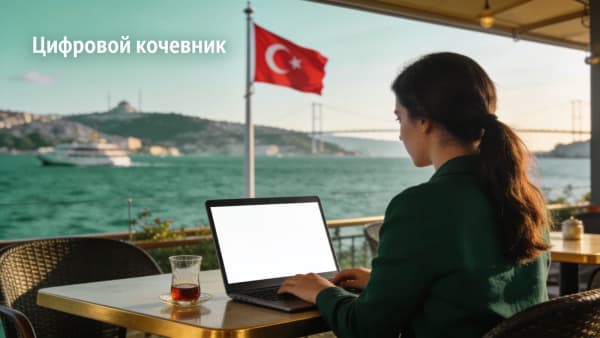
Digital Nomad Visa and Residence Permit: Turkey Guide

Digital Nomad Visa and Residence Permit: Turkey Opportunities
As remote work models become widespread, Turkey has become an attractive destination for digital nomads. Istanbul's international connections, the lifestyle pace of cities like Bodrum and Antalya, cultural diversity, and favorable climate make Turkey stand out for long-term stays.
While Turkey's promotional portal GoTürkiye has a page dedicated to digital nomads, relying solely on promotional texts regarding application requirements, income thresholds, or document lists is insufficient. For a foreigner planning to stay in Turkey for an extended period, it's important to correctly understand the legal difference between a visa and a residence permit.
Digital Nomad Visa and Residence Permit Are Not the Same Thing
A visa relates to an entry regime that allows a foreigner to enter Turkey or stay in the country for a specific period. A residence permit, however, is a permit document issued for staying in Turkey. According to the Presidency of Migration Management's explanation, under Law No. 6458 on Foreigners and International Protection, a residence permit refers to a permit document issued for staying in Turkey.
This distinction is important in practice. A person can enter Turkey with a visa or under visa exemption; however, if they plan to stay longer than the period granted by the visa or visa exemption, they must obtain a residence permit. The Presidency of Migration Management's general rule is clear: foreigners who will stay in Turkey longer than the period granted by their visa or visa exemption, or longer than ninety days, must obtain a residence permit.
Therefore, for someone wanting to 'live in Turkey as a digital nomad,' the matter is not limited to entering the country. How long they will stay in Turkey, how their purpose of stay will be explained, and under which residence permit framework their application will be evaluated should be addressed separately. For current practices and document explanations, GoTürkiye, Migration Management, and e-İkamet screens should be checked together.
Residence Permit Framework for Staying in Turkey as a Digital Nomad
A digital nomad generally refers to someone who conducts their work remotely, not tied to a physical office. This definition can include freelancers, remote employees for overseas companies, or individuals earning income from digital services. However, what matters for official applications in Turkey is which visa or residence permit type this work style will be associated with.
Residence permit applications in Turkey are made online through the Presidency of Migration Management's e-İkamet system. The e-İkamet system is used for initial applications, extensions, and change of residence type applications. For initial and transition applications, foreigners must complete the online application and then apply to the Provincial Directorate of Migration Management in their province on the appointment date with the required documents.
'Required documents' may vary depending on the type of application and the person's situation. Therefore, it may not be sufficient for someone planning to stay in Turkey as a digital nomad to look only at a general document list; the basis of the application and the person's income, passport, entry, and stay status are evaluated together.
Key Documents Highlighted in Applications
Passports or documents equivalent to passports are submitted in residence permit applications. According to e-İkamet explanations, sections of the passport used for entry and exit to Turkey containing identity information, the page with the photograph, and processed pages must be presented. If the passport is not issued in Latin letters, a passport translation certified by a sworn translator or official authorities must be added to the application.
There are also technical requirements for photographs. The photograph to be uploaded to the system for a residence permit must be taken within the last 6 months, have a white background, and be biometric. Family photos, selfies, unrecognizable photos, outdated photos, or black and white photos should not be uploaded to the system; otherwise, the residence permit document may not be issued.
Income declaration is also one of the topics included in the application. According to e-İkamet explanations, income is declared in the application form, and the Directorate may request supporting documents. Income sources can be explained through assets such as real estate income, rental income, salary, commercial profit, inheritance, or savings. This section is particularly important for digital nomads; because documents explaining that remote work is actually being carried out and how financial adequacy is ensured during the stay in Turkey may come up in the evaluation of the application.
How Does the Application Process Progress?
The residence permit application starts through the e-İkamet system. After filling out the application form, an appointment is created within the framework directed by the system. If it's an initial application or change of residence type, the foreigner goes to the Provincial Directorate of Migration Management in their province on the appointment date and submits the required documents.
After the application, evaluation is conducted by the Migration Management. If there is something missing or needs to be supported in the application file, additional documents may be requested. Therefore, income, passport, photograph, and information in the application form must be consistent with each other. For example, if supporting documents are requested to explain the source stated in the income declaration, only written information in the form may not be considered sufficient.
Timing should also be considered in extension applications. According to the Presidency of Migration Management's explanation, residence permit extension applications can be made starting sixty days before the expiration of the current residence permit period. For digital nomads who want to continue staying in Turkey, tracking residence permit extension processes is important for maintaining legal stay status.
Why Is Turkey Attractive for Digital Nomads?
The opportunities Turkey offers for digital nomads are not limited to official application processes. The country's geographical location creates a practical center for people moving between Europe, the Middle East, and Asia. In major cities like Istanbul, it's possible to find international flight connections, co-working spaces, extensive service networks, and social environments in different languages. Cities like Bodrum and Antalya stand out for remote workers seeking a more peaceful lifestyle.
However, when making long-term living plans in Turkey, tourist expectations and legal stay status should be separated. An entry right suitable for short-term visits does not always mean long-term residence. People who want to be in Turkey as digital nomads should clarify from the beginning the duration of stay, income structure, and the official framework under which the application will be made. For questions and issues regarding residence permits, the Foreigners Communication Center provides information through lines 157 from within the country and +90 312 157 11 22 from abroad. The official application screen is the e-İkamet system. Although topics like Digital Nomad Visa, residence permit, and remote work status may seem similar, each can have different legal consequences. For those who want to establish a long-term and uninterrupted life plan in Turkey, the healthiest start is to make this distinction in the right place.
Frequently Asked Questions
Are Digital Nomad Visa and residence permit the same thing?
No. A visa relates to entry to Turkey or a specific stay regime; a residence permit is a permit document issued for staying in Turkey. A residence permit becomes relevant for stays longer than the visa or visa exemption period or longer than ninety days.
Where do those wanting to stay in Turkey as digital nomads apply?
Residence permit applications are made online through the Presidency of Migration Management's e-İkamet system. For initial and transition applications, after completing the online application, you go to the Provincial Directorate of Migration Management on the appointment date with the required documents.
Why is income declaration important in digital nomad residence applications?
Income is declared in the application form and the Directorate may request supporting documents. For digital nomads, documents explaining that remote work is being carried out and how financial adequacy is ensured during the stay in Turkey may come up in the evaluation.
When can residence permit extension applications be made?
According to the Presidency of Migration Management's explanation, residence permit extension applications can be made starting sixty days before the expiration of the current residence permit period. It's important for digital nomads who want to continue staying in Turkey not to miss this schedule.
 Related ServiceDigital Nomad VisaYou can now live and work remotely in Türkiye legally through the Digital Nomad Visa program.
Our team provides comprehensive turnkey services with full legal support and a guaranteed positive outcome.Explore Service
Related ServiceDigital Nomad VisaYou can now live and work remotely in Türkiye legally through the Digital Nomad Visa program.
Our team provides comprehensive turnkey services with full legal support and a guaranteed positive outcome.Explore ServiceGuide steps on this topic
Digital Nomad Guides
View all- Visa vs Residence OptionsThis article
- Tax Obligations
- Work Boundaries
- Risks and Compliance