Address Registration in Turkey After a Residence Permit: What You Need to Do
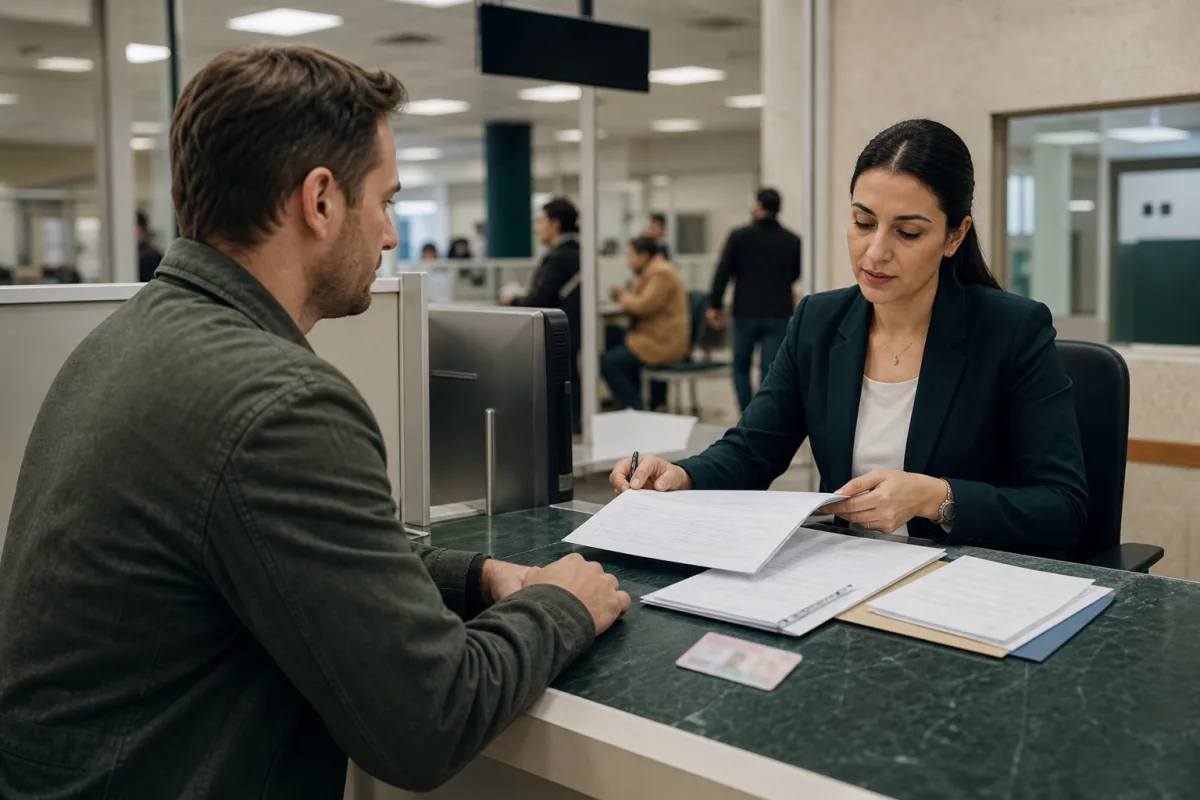
To register an address in Turkey after obtaining a residence permit, a foreigner must check whether their actual residential address has been entered into the official address registration system and, if necessary, submit an address declaration through the authorized authority — usually the Nüfus Müdürlüğü or the migration office, according to the current procedure in your province. The address stated in the e-İkamet application form does not always mean automatic registration in the population system, so after residence permit approval it is important to check the record separately and keep confirmation.
This procedure is especially important for those who have already received their plastic ikamet card or are waiting for its delivery after the application has been approved. In practice, foreigners often assume that if the address was stated when applying for a residence permit, nothing else needs to be done. However, for renewal, receiving official notifications, access to certain e-Devlet services, and confirmation of residence, a correct record in the address system may be required. Below is a step-by-step procedure without unnecessary theory, with a focus on the risks foreigners most often face.
Step 1: Distinguish the e-İkamet address from official registration
The address in the e-İkamet application is the information you provide when applying for or renewing a residence permit. It is needed by the migration authority to review the application, contact the applicant, and deliver documents. But the application form itself is not always equivalent to a full record in the population address registration system. Therefore, after residence permit approval, you should not rely only on a printout of the application form.
Official address registration means that your actual residential address has been entered into the state address system and linked to your foreigner identification number. In Turkey, this matters because government authorities rely not on verbal explanations but on the record in the system. If, during residence permit renewal, a discrepancy is found between the declared address and the actual address, additional documents or explanations may be requested. If you are only preparing for your first application, it is useful to study our material on obtaining a tourist residence permit in Turkey through e-İkamet in advance to understand the overall logic of the process.
Step 2: Check where to apply in your province
After obtaining a residence permit, a foreigner should clarify the current procedure for address registration specifically at their place of residence. In different provinces and districts of Turkey, the practical routing may vary: the applicant may be directed to the İlçe Nüfus Müdürlüğü, the İl Göç İdaresi Müdürlüğü, or asked to make an online appointment first. Therefore, the safest first step is to check the information on official websites and, if necessary, call the local office.
An appointment is usually required for the visit, but availability depends on the district and the workload of the institution. As a rule, submitting an address declaration to a government authority is not a separate commercial service. At the same time, costs may arise for notarizing a contract, translation, copies, or a power of attorney. Do not rely on advice from chats without verification: rules and practice may change, and an address-related mistake may surface later — most often when renewing an ikamet. If your documents were issued outside Turkey, check the translation and legalization requirements in advance: more details are available in the article on translation and legalization of documents for submission in Turkey.
Step 3: Prepare proof of residence at the address
The main purpose of address registration is to show that you actually live at the stated address and have grounds to stay there. Most often, such grounds are a rental agreement, ownership rights, living with a relative, or housing provided by an employer, educational institution, or host party. If the rental agreement is in your name, check that the address in it is complete and matches the address you are declaring. Mistakes in the apartment number, block, district, or street name may create a problem even if you genuinely live there.
If the housing is not registered in your name, the situation requires greater caution. The authorized authority may request the consent of the owner or the person in whose name the contract is made, as well as additional proof. If other people are already registered at the address, additional questions may arise about actual residence and whether registration is permissible. When buying real estate for residential purposes, separately check the legal status of the property and the address details in the documents; for investors, we have a practical checklist on checking real estate in Turkey before purchase.
Step 4: Submit the address declaration and keep confirmation
At the appointment, present your passport, residence permit card or a document confirming approval or that you are waiting for the card, as well as housing documents. If the card has not yet been delivered, clarify in advance whether your district accepts an application based on the foreigner number and status in the system. In some cases, you may need to wait for the physical card; in others, approval confirmation and a foreigner identification number are sufficient. There is no universal answer for all districts, so it is better to clarify the procedure before the visit so as not to lose your appointment.
After the address has been entered, ask for or generate confirmation of address registration, if this option is available through e-Devlet or at the institution. Save the file and a paper copy together with the rental agreement, receipts, and residence permit documents. During a future renewal, this will help you quickly prove that you lived at the declared address and updated your data on time. If you are refused address registration, ask for the reason to be explained: often the problem is not related to the residence permit, but to an address mismatch, the address being occupied in the system, or an incomplete document package.
Step 5: Update your address when moving and before renewing your residence permit
If you move within Turkey, the address must be updated rather than waiting for the next renewal. Under Turkish rules, a change of address must be reported within the prescribed period; for foreigners, it is especially important to avoid a prolonged discrepancy between actual residence and the data in the system. When moving to another district or province, the procedure may differ from a regular address correction. In some cases, moving to another province is connected not only with the address record but also with issues concerning the current residence permit.
Before renewing your ikamet, check the address in advance, not on the day you submit the application form. If an old address is displayed in e-Devlet or in the institution’s system, correcting it may take time and require another visit. Also check whether the address in the rental agreement, insurance policy, e-İkamet application, and actual place of residence matches. The fewer discrepancies there are, the lower the risk of additional requests during the renewal review.
Documents for address registration in Turkey
The exact list depends on the province, type of housing, and your situation, so be sure to check the requirements of the specific institution before your visit. Below is a basic practical list that most often helps prepare for an appointment without repeated visits. It is better to bring the originals with you and prepare copies in advance. If a document is not in Turkish, a sworn translation and notarization may be required.
Pay special attention to housing documents: they are the ones that most often raise questions. If you live with another person, do not try to replace proof of residence with a verbal explanation. If the address in the contract is incomplete, it is better to correct the document before submission. If you are not sure which document will be accepted, get advice before making an appointment so as not to waste time on a repeat visit or create unnecessary contradictions in your migration file.
- Passport and a copy of the page with personal data.
- Residence permit card, foreigner identification number, or confirmation of application approval if the card is still pending.
- Rental agreement, title deed, or other proof of lawful residence at the address.
- If necessary, notarized consent of the owner, landlord, or main tenant.
- A copy of the tapu if you are registering in your own property.
- Documents of family members if the address is being registered for spouses or children.
- Translations, notarized copies, or a power of attorney if requested by the institution.
Typical mistakes after residence permit approval
The first typical mistake is assuming that delivery of the residence permit card automatically resolves the address issue. In practice, the card may be delivered to the address from the application, but this does not always confirm a correct record in the population system. The second mistake is using the address of a friend or acquaintance where you do not actually live. During a check, renewal, or official correspondence, such a discrepancy may raise serious questions.
The third mistake is failing to update the address after moving, especially if the move took place shortly before renewal. The fourth is not keeping confirmations: old contracts, address certificates, copies of applications, and correspondence with the landlord. The fifth is ignoring the address being occupied in the system: if other people are already registered in the apartment, the authority may request additional evidence. The best approach is to treat your address as a permanent element of your migration file, not as a formality that can be checked on the last day.
ESG Consulting Comment
At ESG Consulting, we often see that problems with residence permit renewal begin not with the main document package, but with small discrepancies: one address in e-İkamet, a rental agreement drafted differently, a third actual place of residence, and an old address still listed in the system. For a foreigner, this may look like a technical detail, but for a government authority, the address is one of the key elements confirming residence in Turkey. Therefore, after ikamet approval, we recommend not postponing the check of address registration.
ESG Consulting is a consulting company in Turkey that assists foreigners with ikamet, citizenship, work permits, real estate, and corporate solutions. We work in Russian, Turkish, and English and help clients organize the process so that documents are logical, verifiable, and consistent with one another. If you have obtained a residence permit, are waiting for your card, or are planning a renewal, address registration is one of the first items to check together with insurance validity, the rental agreement, and the accuracy of personal data.
Frequently Asked Questions
Do I need to register my address separately if it is already stated in e-İkamet?
Yes, an address in e-İkamet does not always mean full registration in the address system. After residence permit approval, it is better to check the record through the authorized authority or available e-Devlet services.
Can I register my address before receiving the plastic residence permit card?
Sometimes this is possible, but the procedure depends on the province and the status of your application in the system. Before the visit, clarify whether approval confirmation and a foreigner identification number will be accepted instead of the physical card.
What should I do if other people are already registered at the address?
You need to prepare additional proof of your actual residence and, possibly, the consent of the owner or main resident. The authority may refuse to enter the address without sufficient evidence.
Do I need to change my address when moving to another district or city?
Yes, when you move, the address must be updated in the prescribed manner. If you are moving to another province, clarify in advance whether this affects your current residence permit and the notification procedure.
Which mistakes most often prevent residence permit renewal?
Most often, problems arise because of an old address in the system, an incomplete rental agreement, discrepancies in the apartment number, or registration at an address where the person does not actually live. It is better to correct these issues before applying for renewal.
Is a notarized rental agreement required for address registration?
The requirements depend on the specific situation and the institution’s practice. In some cases, notarization or additional documents may be requested, so it is better to clarify this before making an appointment.
Official Sources
 Related ServiceResidence Permit in TurkiyePlanning to move to Turkiye and live here legally? ESG Consulting will help you obtain a residence permit quickly, smoothly, and in full compliance with Turkish legislation. Our experienced team provides complete assistance throughout the entire process, from document preparation to receiving your residence permit.Explore Service
Guide steps on this topic


